The Bridge
Discussion Join
“For sure the Muslim is within the (sanctuary of) Allah’s
protective covenant (Dhimma) from the moment his mother gave birth to
him until reaching the Divine Presence of his Lord—The Blest The Lofty—on the
Day of Judgment, and if he fulfilled for Allah the
witness of “Lā
'Ilāha 'Il-lal-lāhu” either with veracity or by seeking the
forgiveness, written for him an escape from the Fire!” Said the orphan
Prophet.
Note: “Lā 'Ilāha
'Il-lal-lāhu” means “no deity
other than Allah”.
مجمع الزوائد. الإصدار 2.05 - للحافظ
الهيثمي
المجلد الأول >> 1.كتاب الإيمان.
>> 1. باب فيمن شهد أن لا إله إلا الله.
35-وعن عبد الرحمن بن عوف رضي الله عنه
قال: قال رسول الله صلى الله عليه وسلم:
"إن المسلم في ذمة الله منذ ولدته أمه إلى أن يقوم بين يدي ربه تبارك وتعالى
فإن وافى الله بشهادة أن لا إله إلا الله صادقاً أو باستغفار كتب له براءة
من النار".
رواه البزار وهو من رواية أبي سلمة بن
عبد الرحمن عن أبيه ولم يسمع من أبيه
(وفيه: حجاج بن نصر وهو ضعيف.كما في
هامش الأصل)
Dhimma is a contractual form of providing security and protection. The
protection is provided by an a priori contractual agreement.
لسان العرب
ابن منظور افريقي
والذِّمامُ والمَذَمَّةُ: الحق
والحُرْمة، والجمع: أَذِمَّةٌ.
والذِّمَّة: العهد والكَفالةُ، وجمعها:
ذِمامٌ.
وفلان له ذِمَّة أي: حق.
As with every agreement there has to be an executor, and the executor
of this Divine Agreement is the mother.
No one is born without her presence, even the Prophet Jesus, peace be
upon him, was born from a mother. Couldn’t Allah give Mary
or some other person a miracle to fashion a child from the mud? As
Jesus was able to fashion a bird from the mud? Why the insistence upon
Mary’s painful childbirth, the ridiculing accusations of the people and
her consequent suffering:
19:21 (Angel) Said ‘that’ is as such for you ('you' female gendered)!
قال كَذلكِ
And as such the Sufis believe that the women are the bridge upon which
a man walks towards Allah, as the
Prophetic Phrase worded: From the moment his mother gave birth to him
until reaching Allah—The
Bridge.
Not even a prophet was born without a mother, though one was born
without a father.
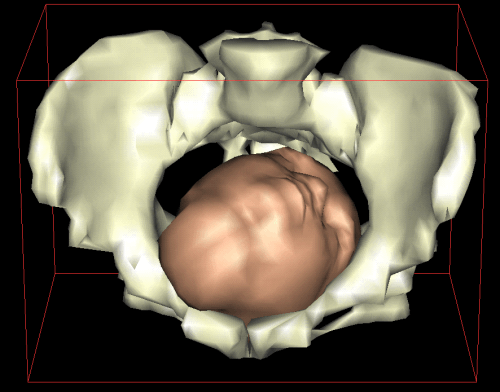
The childbirth of female human is different that of any other creature:
None has the stipulations of a covenant of the protection, as hers does
for certain.
As every beautiful object must have a veil to protect its beauty from
the wrongful eyes, the physiological processes of her childbirth are
the veils occluding the beauty of Allah’s
Presence as the signer of this covenant.
And every modality of the Divine Presence requires an Adab (Etiquette),
from the child is required the Adab (Etiquette)
of politeness and mercy for his mother, and in return, and no less at
that, the mother’s Adab (Etiquette)
to never curse her child or backbite him or accuse him falsely or make
fun of him; all the said etiquettes of dealing with strangers must be
enforced, first and foremost, by her for her child and then for others.
What the mother asks for her child, is given, therefore be cautious of
what you ask for:
2:61 And indeed for you (is) what you asked for!
وَإِذْ قُلْتُمْ يَا
مُوسَى لَنْ نَصْبِرَ عَلَى طَعَامٍ وَاحِدٍ فَادْعُ لَنَا رَبَّكَ
يُخْرِجْ لَنَا مِمَّا تُنْبِتُ الْأَرْضُ مِنْ بَقْلِهَا وَقِثَّائِهَا
وَفُومِهَا وَعَدَسِهَا وَبَصَلِهَا قَالَ أَتَسْتَبْدِلُونَ الَّذِي هُوَ
أَدْنَى بِالَّذِي هُوَ خَيْرٌ اهْبِطُوا مِصْرًا فَإِنَّ لَكُمْ مَا سَأَلْتُمْ
وَضُرِبَتْ عَلَيْهِمُ الذِّلَّةُ وَالْمَسْكَنَةُ وَبَاءُوا بِغَضَبٍ
مِنَ اللَّهِ ذَلِكَ بِأَنَّهُمْ كَانُوا يَكْفُرُونَ بِآَيَاتِ اللَّهِ
وَيَقْتُلُونَ النَّبِيِّينَ بِغَيْرِ الْحَقِّ ذَلِكَ بِمَا عَصَوْا
وَكَانُوا يَعْتَدُونَ
Mother’s excessive yearning for material gain for her child is granted,
so is her curse whilst the quick passing of an angry moment.
Perhaps the best is the mother’s stillness of silence around her
newborn:
19:26 "…And if you (Mary) happen to see any man, say, 'I have vowed a
fast to
((Allah)) Most Gracious,
and this day will I enter into no talk with any human being'"
فَكُلِي وَاشْرَبِي وَقَرِّي عَيْنًا
فَإِمَّا تَرَيِنَّ مِنَ الْبَشَرِ أَحَدًا فَقُولِي إِنِّي نَذَرْتُ
لِلرَّحْمَنِ صَوْمًا فَلَنْ أُكَلِّمَ الْيَوْمَ إِنْسِيًّا
(c) 2007, 2002
Dara O. Shayda